

This post may contain affiliate links. As an Amazon Associate, I earn from qualifying purchases at no extra cost to you.
Table of Contents
🍴 Top Kitchen Essentials You'll Love


Introduction to Traditional Vietnamese Sticky Rice Cake
If you’re looking for a delightful culinary experience, the Traditional Vietnamese Sticky Rice Cake is the perfect recipe to explore. Have you ever wondered how cultures blend simple ingredients to create such rich and meaningful dishes? This cake, made from glutinous rice, mung beans, and pork belly, is not just a meal; it’s a celebration in every bite.
Originating from Vietnam, this dish is often enjoyed during special occasions like the Lunar New Year. The careful combination of savory and sweet flavors, along with its distinctive texture, makes the Traditional Vietnamese Sticky Rice Cake a standout recipe that embodies comfort and nostalgia. Every ingredient tells a story—whether it’s the sticky, chewy rice or the creamy, protein-packed mung beans, each component adds a layer of richness.
Preparing this delightful cake brings family and friends together, encouraging collaboration and love. Who wouldn’t cherish a recipe that creates magical moments around the dining table? Plus, it is surprisingly easy to make! With just a few steps and a little patience, you can bring Vietnamese tradition to your kitchen. Its unique flavors are sure to impress, making it an excellent addition to your cooking repertoire.
Key Benefits of Traditional Vietnamese Sticky Rice Cake
Why You’ll Love This Recipe
- Flavorful Harmony: The blend of sweet mung beans and savory pork belly creates a delicious contrast.
- Cultural Connection: This cake connects you to Vietnamese traditions and celebrations.
- Simplicity: With minimal ingredients, this recipe is easy to follow and replicate at home.
- Versatile Dish: Perfect for snack time or as a festive treat during holidays.
- Healthy and Filling: Glutinous rice and mung beans provide lasting energy.
- Family-Friendly: A fun dish for the whole family to make together.
What Makes It Stand Out
What truly sets Traditional Vietnamese Sticky Rice Cake apart is its authenticity. With roots steeped in Vietnamese culture, this recipe offers a taste of tradition that is hard to replicate. It’s more than just food; it’s a piece of history that has been passed down through generations.
There’s room for creativity too! You can customize the filling, using ingredients like shiitake mushrooms or different cuts of meat, depending on what you have on hand. This adaptability allows home cooks to experiment while still paying homage to traditional roots. Whether served during celebrations or a casual Sunday gathering, this cake is bound to please a crowd.
Ingredients for Traditional Vietnamese Sticky Rice Cake
Complete Ingredient List with Measurements
- 2 cups glutinous rice
- 1 cup mung beans, peeled
- 300 grams pork belly, cut into thin slices
- Banana leaves for wrapping
- Salt, to taste
- Black pepper, to taste
Substitutes and Alternatives
If you’re dealing with allergies or dietary restrictions, there are alternatives available. For a vegetarian version, consider replacing pork belly with marinated tofu or mushrooms to capture that savory flavor. If glutinous rice isn’t available, try using another sticky rice variety, keeping in mind that the texture might differ slightly.
Always check that your substitutions align with your dietary needs. For example, gluten-free eaters can safely enjoy glutinous rice, as it naturally doesn’t contain gluten.
How to Make Traditional Vietnamese Sticky Rice Cake – Step-by-Step Directions
Step 1 – Prepare Ingredients
Begin by soaking the glutinous rice and mung beans separately in water overnight. This allows them to soften, which is essential for achieving the correct texture.
Step 2 – Cook the Base
The next morning, drain the soaked mung beans and steam them until soft, about 20 minutes. Once they’re cooked, mash them until smooth.
Step 3 – Flavor the Pork Belly
Season the thin slices of pork belly liberally with salt and pepper. This simple seasoning will enhance the savory aspect of the cake.
Step 4 – Create Your Banana Leaf Wrapper
Prepare the banana leaves by cutting them into rectangular shapes. You will need enough leaves to create a sturdy wrapper for your ingredients.
Step 5 – Layer the Ingredients
Starting with glutinous rice, create a base layer in the center of each banana leaf. Add a layer of mashed mung beans followed by a layer of seasoned pork belly.
Step 6 – Fold and Secure the Wrap
Carefully fold the banana leaves over the layered ingredients to encase them tightly. Secure with string or kitchen twine to prevent any fillings from escaping during cooking.
Step 7 – Steam the Cake
Place the wrapped cakes into a steamer and cook for about 4-6 hours. This long steaming allows the flavors to meld beautifully, creating a delectable dish.
Step 8 – Let It Cool
Once finished, carefully remove the cakes from the steam and let them cool for about 30 minutes. This will help the flavors settle.
Step 9 – Slice and Serve
After cooling, unwrap the banana leaves and slice the cake into portions.
Serving Suggestions for Traditional Vietnamese Sticky Rice Cake
Best Occasions to Serve This Dish
Traditional Vietnamese Sticky Rice Cake is perfect for celebrations like the Lunar New Year or family gatherings. It’s not just food—it’s a symbol of togetherness and joy. Share it with friends during potlucks or enjoy it as a comforting snack on a rainy day.
What to Serve With It
Pair this dish with Vietnamese pickled vegetables or a light dipping sauce of soy sauce and sliced chilies. For drinks, try serving with jasmine tea or coconut water for a fresh palate cleanse.
How to Store Traditional Vietnamese Sticky Rice Cake Properly
Best Storage Practices
Store any leftover cake in an airtight container in the refrigerator for 2-3 days. Make sure it is completely cooled before placing it in the fridge to maintain its texture.
Reheating and Freezing Tips
To reheat, steam the cake again for about 15-20 minutes, or microwave it on medium power until it’s heated through. If freezing, wrap it tightly in plastic wrap or aluminum foil to prevent freezer burn, and consume within 1-2 months for the best quality.
Tips & Tricks for Traditional Vietnamese Sticky Rice Cake
Mistakes to Avoid
1 – Not soaking the rice and beans
Failing to soak will lead to tough textures and uneven cooking. Always soak overnight to ensure proper hydration.
2 – Overcooking the filling
Cooking mung beans too long can make them mushy. Aim for a creamy yet firm consistency to hold shape.
3 – Insufficient seasoning
Be generous with salt and pepper on the pork belly; this is where much of the flavor comes from.
4 – Packing too tightly
While it might seem tempting to pack in all the ingredients, leaving some space allows for expansion during steaming.
5 – Skipping the cooling step
Letting the cake cool helps it firm up, making it easier to slice without falling apart.
Extra Tips for Better Results
For enhanced flavor, consider marinating the pork belly in soy sauce or garlic for a few hours before cooking. Additionally, adding a sprinkle of toasted sesame seeds on top once sliced can enhance both flavor and presentation.
Recipe Variations of Traditional Vietnamese Sticky Rice Cake
Creative Twists
1 – Vegetarian Version
Substitute pork belly with a mix of mushrooms and tofu. This retains the heartiness while catering to various dietary preferences.
2 – Sweet Variation
For a dessert twist, fill the cake with sweetened mung bean paste and top with shredded coconut. It’s a delightful juxtaposition to the traditional savory filling.
3 – Herbal Infusion
Incorporate chopped herbs like cilantro or green onions into the mung beans for a fresh twist that adds a pop of color and flavor.
Dietary Adjustments
For a gluten-free diet, the glutinous rice used in Traditional Vietnamese Sticky Rice Cake naturally meets this need. Additionally, to make it dairy-free and vegan, ensure no animal ingredients are used in the wrapping or fillings.
Conclusion about Traditional Vietnamese Sticky Rice Cake
The Traditional Vietnamese Sticky Rice Cake is more than just a dish; it is a connection to culture and family. With every bite, you experience the rich history and flavors of Vietnam. It is also incredibly satisfying to make and share, allowing everyone in the kitchen to participate in an age-old tradition. So why not try making this delightful cake? Its ease in preparation, delightful flavor, and uniqueness make it a worthy addition to your culinary adventures.
FAQs about Traditional Vietnamese Sticky Rice Cake
How long can I store Traditional Vietnamese Sticky Rice Cake?
Store it in the refrigerator for 2-3 days. Make sure it cools completely before refrigerating.
Can I freeze Traditional Vietnamese Sticky Rice Cake?
Yes, wrap it well and freeze for 1-2 months. Thaw in the refrigerator before reheating.
What’s the best way to reheat the cake?
Steam the cake for about 15-20 minutes or microwave on medium until heated through.
Can I make this recipe vegan?
Absolutely! Substitute the pork with marinated tofu or mushrooms for a delicious vegan alternative.
What if I don’t have banana leaves?
You can use parchment paper or aluminum foil as a substitute, though it may alter the flavor slightly.
Is it necessary to soak the rice and mung beans?
Yes, soaking is crucial for achieving the right texture in the final dish.
Can I add different fillings?
Certainly! Customize with other ingredients like mushrooms for a different flavor profile.
How do I know if the mung beans are cooked correctly?
They should be soft and easily mashable, not grainy or hard.
What drinks pair well with the cake?
Jasmine tea or coconut water complements the flavors beautifully.
Is this cake gluten-free?
Yes, as it is made from glutinous rice, it is naturally gluten-free.
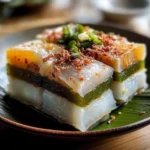
Traditional Vietnamese Sticky Rice Cake
Ingredients
Main Ingredients
- 2 cups glutinous rice Soaked overnight.
- 1 cup mung beans, peeled Soaked overnight.
- 300 grams pork belly, cut into thin slices Seasoned with salt and pepper.
- Banana leaves for wrapping Cut into rectangular shapes.
- Salt To taste.
- Black pepper To taste.



Instructions
Preparation
- Begin by soaking the glutinous rice and mung beans separately in water overnight.
- The next morning, drain the soaked mung beans and steam them until soft, about 20 minutes. Once they’re cooked, mash them until smooth.
- Season the thin slices of pork belly liberally with salt and pepper.
- Prepare the banana leaves by cutting them into rectangular shapes.
Assembly
- Starting with glutinous rice, create a base layer in the center of each banana leaf.
- Add a layer of mashed mung beans followed by a layer of seasoned pork belly.
- Carefully fold the banana leaves over the layered ingredients to encase them tightly. Secure with string or kitchen twine.
Cooking
- Place the wrapped cakes into a steamer and cook for about 4-6 hours.
- Once finished, carefully remove the cakes from the steam and let them cool for about 30 minutes.
- After cooling, unwrap the banana leaves and slice the cake into portions.